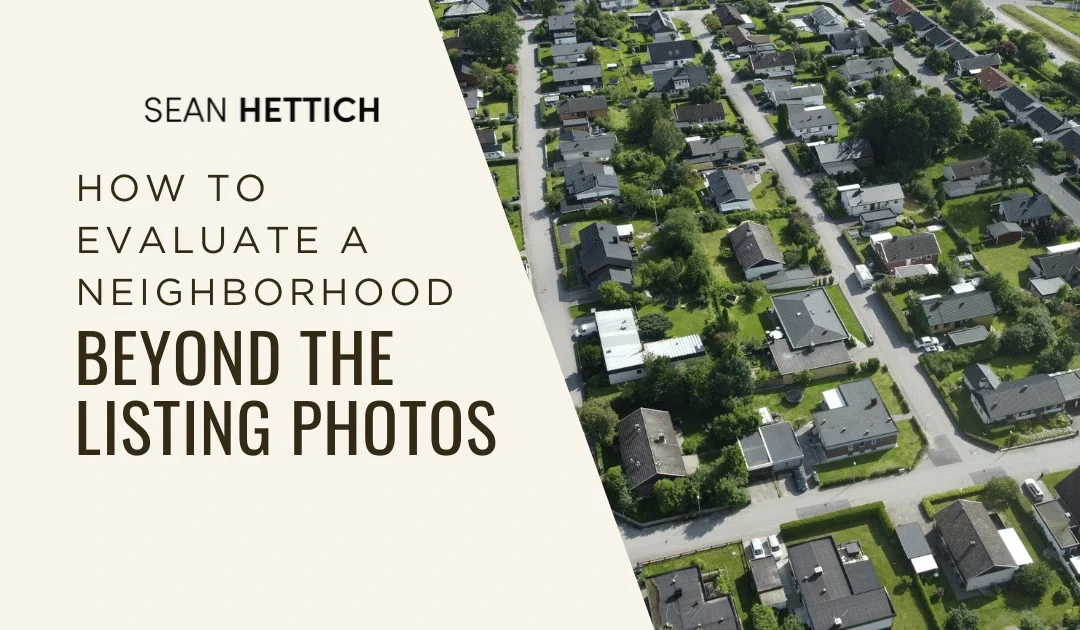
Scrolling through online listings can feel reassuring. The homes look pristine, the yards are neatly maintained, and each room appears carefully staged. But those images stop at the property line. They do not reveal traffic patterns during peak hours or offer a view of the surrounding homes and streets.
Details like these shape your daily routine just as much as the house itself. Traffic flow, nearby businesses, noise levels, and overall neighborhood activity all influence what everyday life will be like.
This becomes even more important if you are relocating from out of state. Without firsthand familiarity, it’s essential to look beyond the listing and gather information about the broader area.
Researching the neighborhood in advance gives you a better understanding of what daily life may involve before moving forward with a purchase.
Schedule Visits During Different Parts of the Day and Week
One visit on a Saturday afternoon may not fully reflect how a neighborhood feels at other times. Activity levels, traffic patterns, and the overall atmosphere often shift throughout the day and across the week.
Consider stopping by on a weekday morning around 8 AM to observe commuting patterns. Notice how traffic moves at neighborhood exits and nearby intersections, and how easily residents are able to leave the area. This can provide a clearer picture of what a typical morning routine may involve.
It is also helpful to return on a weeknight around 6 PM to see how the environment changes after work hours. Visiting at different times offers a more complete view of daily life in the neighborhood.
Research Schools and Local Services
Schools influence more than education alone. Even for buyers without children, school quality is often linked to property values and overall neighborhood stability.
If you have children, begin with resources such as GreatSchools.org to review general ratings and parent feedback. You can also explore individual school websites to learn about academic programs, extracurricular activities, and upcoming events.
Reviewing this information can help you understand how the school communicates and what opportunities are available to students.
Access to healthcare is another factor to review. Identify the nearest urgent care centers and hospitals, and consider how long it typically takes to reach them during normal traffic conditions.
Community amenities are also worth exploring. Libraries, recreation centers, public pools, and sports facilities offer insight into available services in the area.
Review Nearby Amenities and Daily Convenience
If you are familiar with the area, taking a drive through the neighborhood can give you a better sense of what is close by. If you are relocating from outside the region, tools like Google Maps can help you evaluate what surrounds the property.
Identify the nearest grocery stores and consider how convenient they will be for regular shopping. It is also helpful to check distances to pharmacies, gas stations, banks, and other places you may visit on a weekly basis.
Restaurants and entertainment options provide additional perspective. Some buyers prefer living near downtown areas or popular gathering spots, while others are comfortable driving farther for dining and activities. Reviewing what is nearby can help you decide what level of access feels right for your routine.
Access to green space is another element to review. Some neighborhoods include parks, trails, and open areas within walking distance, while others may require a short drive. Looking at maps and satellite views can provide a more complete picture of how much outdoor space is available in the immediate area.
Evaluate Your Commute Before Making a Decision
Take time to review what your daily commute will involve. In many parts of Acadiana, traffic within the city is generally manageable. However, if your drive includes highway travel or a longer distance, travel times may vary depending on the route and time of day.
Some neighborhoods appear close on a map but require navigating several surface streets before reaching a main road or highway entrance. Reviewing the entire route can help you see how direct the drive actually is.
Google Maps and Apple Maps provide estimated travel times, which can be helpful as a starting point. It is also worth checking those estimates during peak morning and evening hours to see how conditions may change throughout the day.
Explore Social Media and Community Groups
Social media can offer additional insight into a neighborhood’s day-to-day activity. Searching Facebook for the neighborhood name may lead you to a dedicated community group. Browsing recent posts and discussions can give you a sense of common topics shared among residents.
You can also search Reddit to see if there is a neighborhood-specific subreddit or broader local community forum. Reading through conversations may provide an added perspective on what living in the area is like.
Additional Resources for Buyers Relocating to the Area
If you are moving from outside the region, consider planning an extended visit rather than a brief weekend trip. Staying in a short-term rental within the neighborhood you are considering can give you a better sense of daily routines, traffic patterns, and overall atmosphere. Experiencing the area for several days may provide clarity that online research cannot.
Working with a local real estate agent who understands Acadiana neighborhoods can also provide a valuable perspective. An experienced agent can share insights about traffic flow, development plans, school zones, and neighborhood characteristics that may not be immediately visible online.
Purchasing a home is a significant decision, and location plays a large part in long-term satisfaction. A property may check every box, but if the surrounding area does not align with your lifestyle, it can affect your overall experience.
Read more: How a Real Estate Agent Helps You Find the Best Deals on Property in Acadiana
The steps outlined above are starting points to help you evaluate neighborhoods beyond listing photos.
Some buyers may be comfortable with a slightly longer commute to downtown Lafayette in exchange for a larger yard in Broussard. Others may prioritize proximity to highly rated schools in Lafayette, even if it comes at a higher price point. Identifying your priorities will help guide your decision.
This level of research becomes even more important if you are relocating from another state.
If you are considering a move to the Acadiana area, working with a real estate agent who knows the region well can help you narrow down areas that align with your goals. Reach out to me to discuss what you are looking for and explore which neighborhoods may be a good match for your needs.